Posted on Leave a comment

How Thriller-Writer Mike Ewing Began Mountain Biking

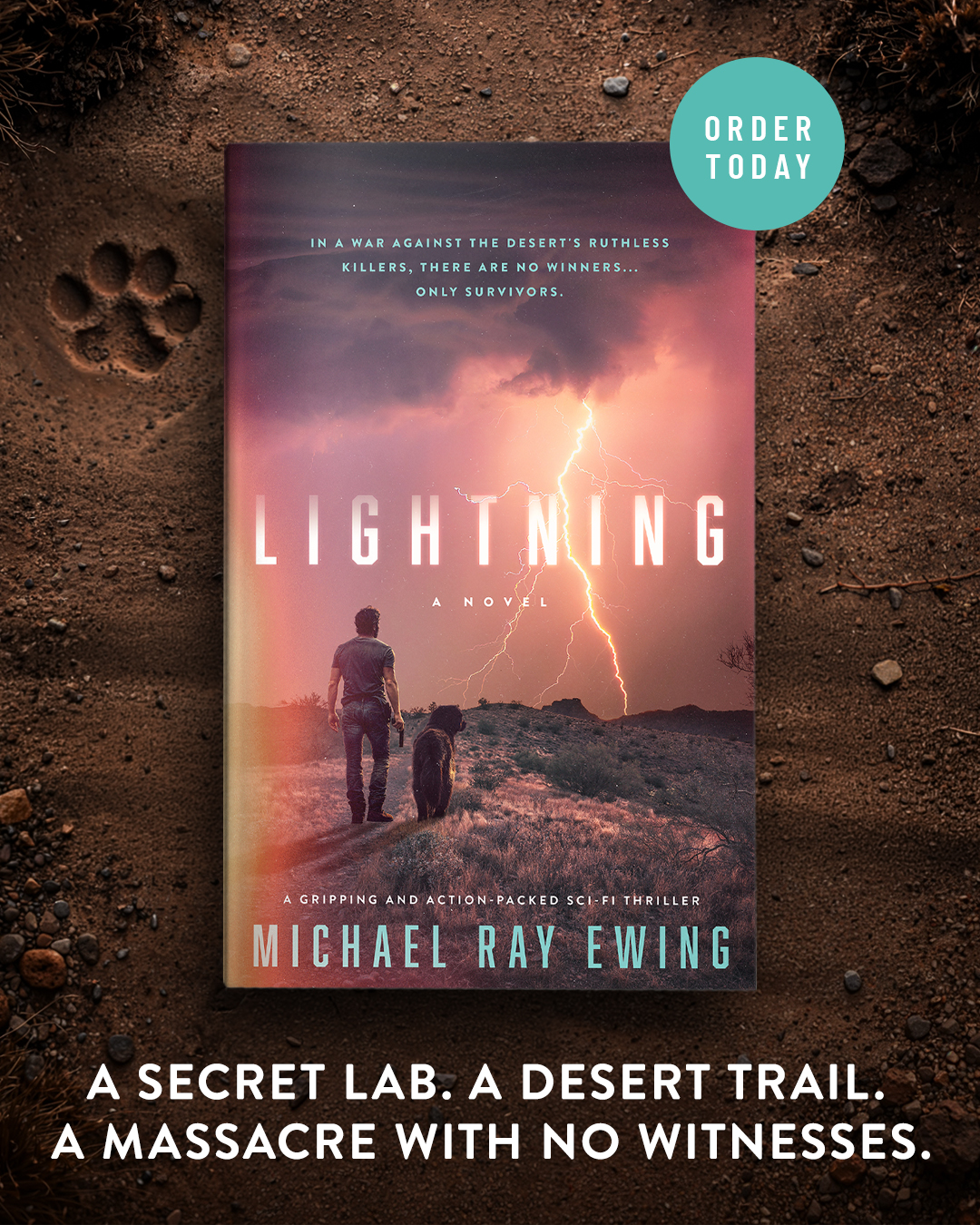
book cover of the thriller LIGHTNING with a man and dog walking across the desert

Beginning writers are often advised to “write what you know.” One of the main characters in my new thriller, LIGHTNING, is Adam Barnett, a mountain biker and owner of a mountain-biking store in Defiance, Arizona. Adam’s kind of an average guy, like me, and if he’s passionate about one thing, it’s mountain biking. Again, like me.

My First Experience with Mountain Biking Was a Disaster

The first time I went mountain biking was in Moab, Utah, and I hated it. Moab Utah is Mecca for mountain bikers. People comes from all over the world to do Slickrock Bike Trail, Captain Ahab, and the Whole Enchilada. I had gone to Moab with some of my coworkers from Colorado, and we didn’t do any of those trails. What we did instead was ride at the side of dirt roads so we could get covered in dirt as cars pulling trailers drove past. It was one of the worst experiences of my life.

The last time I had ridden a bike before that trip had been when I had comfortably fit on my Schwinn Red Flyer. That wasn’t a good bike or the right equipment for Moab. I rented a hardtail mountain bike and off we went. The temperature was in the upper 90’s, and we rode at the side of various dirt roads in the middle of the day. The sun cooked us. Sitting perched on my bike, I felt like a slow roasted rotisserie chicken. I didn’t have gloves and didn’t have bike shorts. The seat felt like it was going to cut me in half. My hands ached from gripping the handlebars. Worst of all, I came back to the hotel covered in dirt. I looked and felt like I had worked a construction job without getting paid. Everyone else had had a blast. I told them they were nuts as I spat out dirt.

The next day I turned my bike back into the rental company and not so politely told everyone that while they went “mountain biking” I would go 4-wheeling in my SUV. As they pedaled at the side of the dirt road, I raced past in air-conditioned comfort honking while making sure they literally ate my dust. I swore never to go mountain biking again.

I Had to Be Persuaded to Like This Sport

In the fall following my trip to Moab, my former wife was starting her junior year at Arizona State University. She got tired of walking to class so she bought a mountain bike to get around. She enjoyed it and decided to go biking on some of the nearby trails. Arizona is a great place to mountain bike if you are stupid enough to do so. You can ride year-round without having to deal with snow or rain, and there are literally hundreds of miserable trails to ride within a half hour of Phoenix. She bought a book on the different trails and set off. Her first ride was on Desert Classic at South Mountain. She loved it and told me how much fun she’d had. I sneered at her and told her she was delusional.

She did other trails from the book and, after a few months, asked me to join her. I told her no. She kept badgering me about it, and I grudgingly gave in, mostly because I wanted to show her how I was right and she was wrong and how she must be doing something incorrectly to have so much fun.

The Turning Point

She took me to a bike shop, and I marched in with my list of complaints. I walked out with a full suspension bike, padded bike shorts, padded gloves and a gel saddle. We loaded up our bikes and went to Hawe’s Loop. The ride was a revelation. The trail was a narrow, twisty single-track that snaked over multiple mountains as it made its way down to the Bush Highway. There were no cars to dodge, the bike’s full suspension soaked up the rocks, and I didn’t get covered in dirt. It was also the middle of winter in Phoenix so the weather was absolutely perfect. We finished the ride, and she asked me if I had had fun. I admitted that I had. She asked me if I wanted to do it again. I said I did.

Over the next six months, we rode almost every day. During the week she picked me up from work and we went riding. On weekends, we rod one day and rock-climbed the next. Sometimes we did both. We slowly worked our way through her trail book and eventually made plans for a pilgrimage to Moab. I called my coworkers in Colorado, and we all met in Moab for a three-day weekend.

We rode Slickrock Bike Trail. Slickrock is a nine-mile roller-coaster that winds its way up and down and across a highly eroded sandstone plateau. The ascents will humble even the best of mountain bikers, and the descents leave you questioning your sanity. About a mile from the parking lot, we came upon a pool of blood where someone had crashed and bled. The complaints from my former co-workers soon started. Only my ex and I did the entire trail. Everyone else turned back to ride the familiar dirt roads.

It was the last time I ever rode with them.

Mountain-Biking Has Been a Constant Ever Since

In the twenty years since that trip, I have worked at four different companies, been spun off, acquired, outsourced, insourced, been married twice, had three kids and owned four different houses. I’ve bought six different mountain bikes and ridden, and bled, on some of the most technical trails in the world. I have come face-to-face with bobcats, been divebombed by hawks, hissed at by Gila monsters, rattled at by  rattlesnakes, and spotlighted by police helicopters for riding at night. Most of my rides are on black diamond trails, some with warning signs and most without. Hikers stare in astonishment as I ride up the mountains through rocks and then turn around and fly back down as gravity tries its best to kill me.

People ask me all the time why I ride. It is difficult, dangerous, expensive and frequently life-threatening. On cold winter mornings it would be easier to stay in bed. In the middle of the Phoenix summer when the temperature is only slightly less hot than the surface of the sun, I ask myself if I’m crazy. But when I am in the zone and hitting my lines and going up and down trails I have never ridden before, I am reminded that mountain biking, like most things in life, isn’t about the destination but the journey.

And that journey is done best on two wheels.

Posted on Leave a comment

Stories about growing up and growing old

a man in a coffee shop reading the book A DRY HEAT
Posted on 2 Comments

An Important New Book about Adoption

book standing upright

Why does wisdom often begin with sorrow? Why is it that knowing the truth is a requirement for those seeking solace for their grief? Like the parents at Sandy Hook Elementary or the students at Marjorie Stoneman Douglas High School, Lorraine Dusky has learned the hard way. When you lose a loved one, nothing ever erases the pain. The only consolation is in knowing you have fought for change and made a difference.

In this memoir, a courageous woman who moved heaven and earth to find the daughter she couldn’t raise examines questions that lie at the heart of surrendering a child. What are the long-term effects of adoption? What questions do adoptees have about their origins? What are the roadblocks to reunion, both legal and emotional? Why do adoptees need and deserve to know the details of their heritage?

Intimate and revelatory, this is the life journey of a trailblazer in the adoption reform movement. Dusky is a journalist who has covered rock concerts, space launches, and the changing role of women in the workplace. Now, in this wry and engaging memoir, she uses her investigative skills to examine the personal costs and social history of adoption.


Grand Canyon Press is proud to introduce this page-turning memoir to a new generation of readers. In it you will meet her hardworking Polish family, read of the economic challenges faced by her beloved father, and learn about her determination to become a reporter.

Even more than that, readers will learn that there is a high cost to family separation, a cost that is borne not just by mothers who lose their babies to adoption, but by the grandparents and cousins and, most especially, by the children themselves. Eventually, these children grow up. Many urgently need health histories and face legal roadblocks when they seek information about their origins. Some undertake DNA searches in order to find their long-lost relatives.

But even happy reunions have a shadow side. Amid the joy, there is unfamiliarity and pain.

Read Lorraine Dusky’s Hole in My Heart: Love and Loss in the Fault Lines of Adoption. Preview the book and buy it in the bookstore of your choice.

Posted on Leave a comment

Home Library Ideas: How to Store Your Books and Keep Them Looking New

messy living room

The New Year is now upon us, and book fans are preparing for all of the wonderful books they intend to read in 2021. If you consider yourself a reading connoisseur, you may notice that your favorite books are starting to pile up. Designing your own home library is a great way to keep them stored in an organized, creative way. Before you start planning your very own private library at home, it’s important to know how to store your books to keep them looking their best. Read on for some inspirational ideas for DIY book storage and how you can give your books the care they deserve.

Continue reading Home Library Ideas: How to Store Your Books and Keep Them Looking New
Posted on Leave a comment

“Go West, Young Man”: The Mystery Behind the Famous Phrase

Horace Greeley

Newspaper history is full of myths, “viral” stories, and tall tales. Folklore and journalism are often close cousins, especially the colorful “yellow journalism” that sold outright lies to rake in subscriptions.  In the annals of Hoosier and American journalism, one persistent, tantalizing tale continues to baffle the sleuths at the Oxford Dictionary of Quotations.

Who wrote the famous slogan “Go west, young man, and grow up with the country”?  It’s one of the great catch phrases of Manifest Destiny, an exhortation that echoes deep in the soul of Americans long after the closing of the frontier.  But when you try to pin down where it came from, it’s suddenly like holding a fistful of water (slight variation on Clint Eastwood theme) or uncovering the genesis of an ancient religious text — especially since nobody has ever found the exact phrase in the writings of either of the men who might have authored it.

Continue reading “Go West, Young Man”: The Mystery Behind the Famous Phrase
Posted on Leave a comment

Writing About the Grandeur of Yosemite

Few places inspire more awe than the view of Yosemite Valley from Glacier Point. The Scotsman, John Muir, fell in love with the rugged beauty of the landscape and through his writing and political activism convinced lawmakers to preserve Yosemite Valley and much of the surrounding country.
“Only by going alone in silence, without baggage, can one truly get into the heart of the wilderness. All other travel is mere dust and hotels and baggage and chatter.” –John Muir in a letter to his wife Louie in July 1888

John Muir has inspired Yosemite’s travelers to see under the surface through his poetic imagery: “Climb the mountains and get their good tidings. Nature’s peace will flow into you as sunshine into trees.” Muir, who came to California seeking the solitude of nature, decided to stay—dabbling as a glaciologist, a wilderness activist, and a writer who published persuasive ecological articles with a quill made from a golden eagle feather found on Yosemite’s Mount Hoffmann.

Continue reading Writing About the Grandeur of Yosemite
Posted on Leave a comment

Jack London: Work-Life Balance

I would rather be ashes than dust!

I would rather that my spark should burn out in a brilliant blaze than it should be stifled by dry-rot.

I would rather be a superb meteor, every atom of me in magnificent glow, than a sleepy and permanent planet.

The function of man is to live, not to exist.

I shall not waste my days trying to prolong them.

I shall use my time.

–Jack London
Continue reading Jack London: Work-Life Balance
Posted on 1 Comment

The Russian-American Company in California

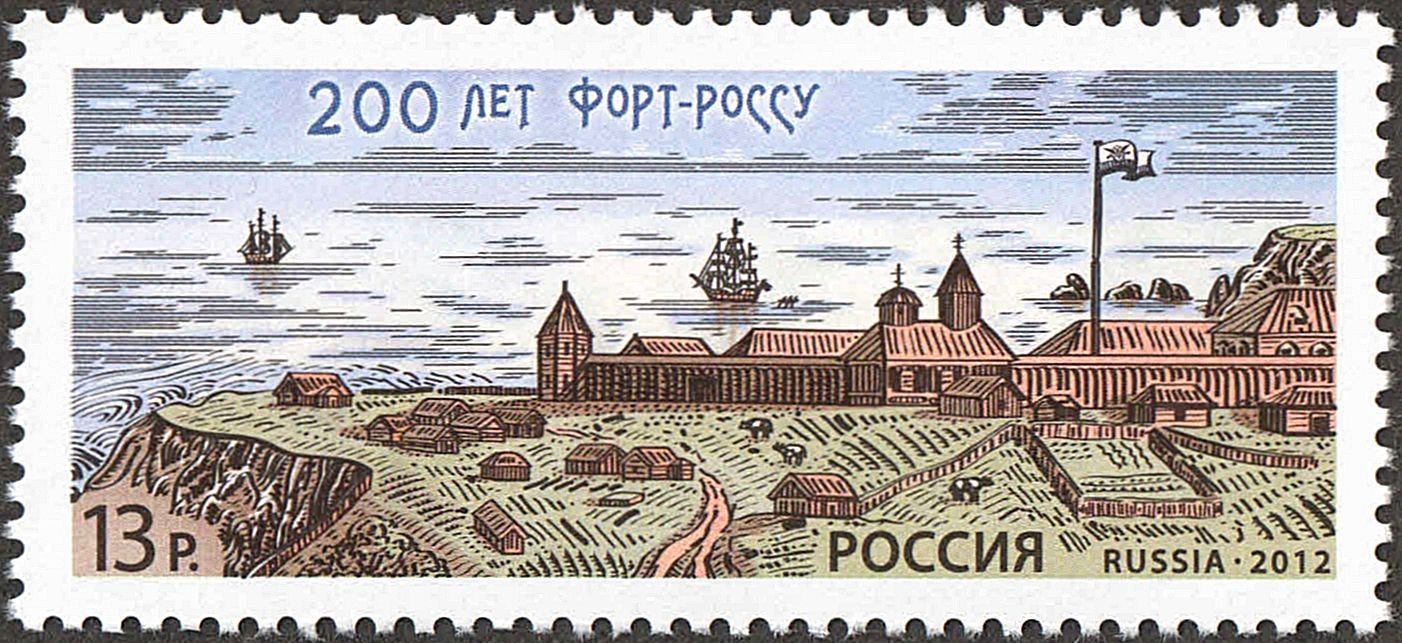
Fort Ross commemorative stamp
Fort Ross, California
Fort Ross, located just north of San Francisco and the “Russian River,” was the site of the Russian-American Trading Company. The wooden fort, with its onion dome chapel, still stands.

Fort Ross, once shown on maps as “Fort Russe”, is a remnant of the Russian effort to build a thriving fur industry. This southernmost settlement of the Russian empire was supposed to grow wheat that could be shipped north to Sitka. A secondary goal was to provide an additional source of pelts after the population had been decimated by overharvesting of squirrels, sea lions, otters, and foxes.

Continue reading The Russian-American Company in California
Posted on Leave a comment

The Literature of Exploration: John Wesley Powell’s 1869 Expedition

Colorado River
At Horseshoe Bend, the Colorado River takes a dramatic turn. (Photo by Omer Salom on Unsplash)


Imagine being the first person to go down the Colorado River and explore the Grand Canyon. That feat was accomplished by John Wesley Powell, a one-armed, former Civil War general. This article by New Mexico author Rich Holzin first appeared in The Daily Kos

For those who are interested in late 19th Century Western history, today begins an abridged account of one of America’s most outstanding explorers of the Colorado Plateau’s canyon country, and with the proviso a man who certainly was ensnarled with allegations of duplicity given his role in his surveys of the canyon country defined by the Green and Colorado rivers. I am not a typical Powell biographer in the sense I defend the man’s character by turning a blind eye to the charges that were later levied against him by some of his 1869 crew members and the public who, some of them, felt betrayed by his writings. Still, I rise to his defense in some ways, while acknowledging, as he did in his later years, some rather glaring mistakes that he made.

Continue reading The Literature of Exploration: John Wesley Powell’s 1869 Expedition